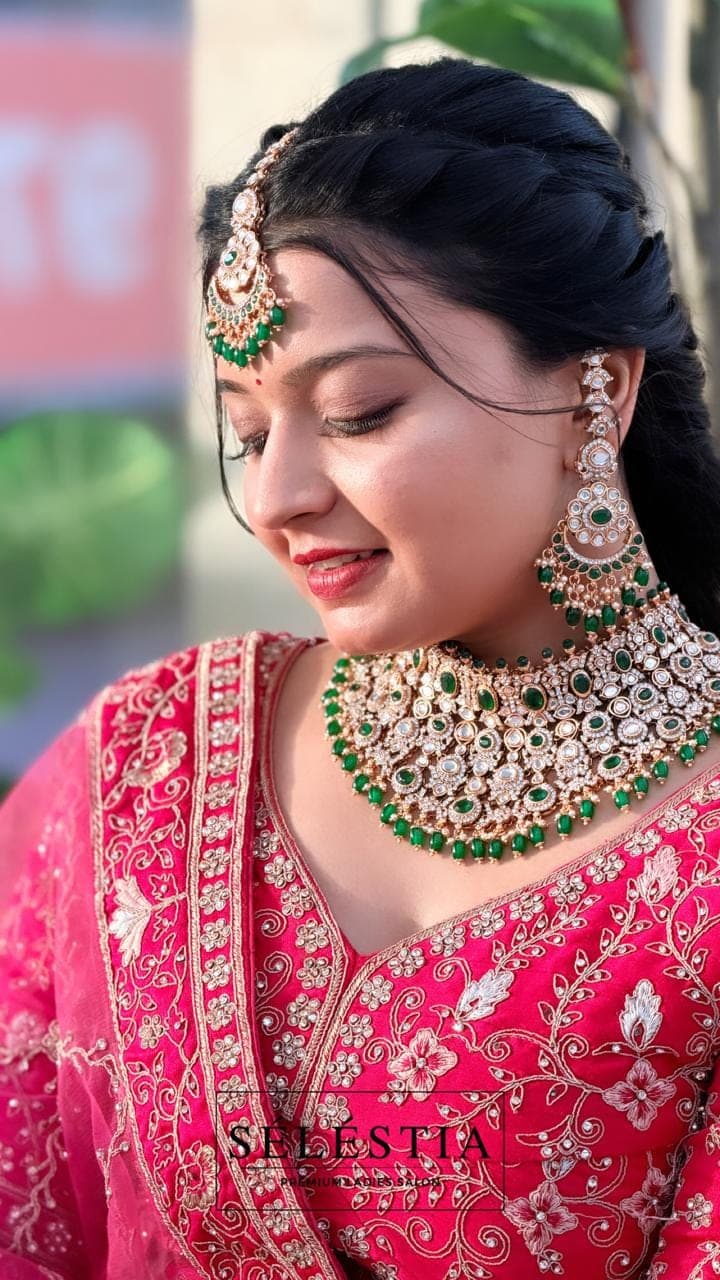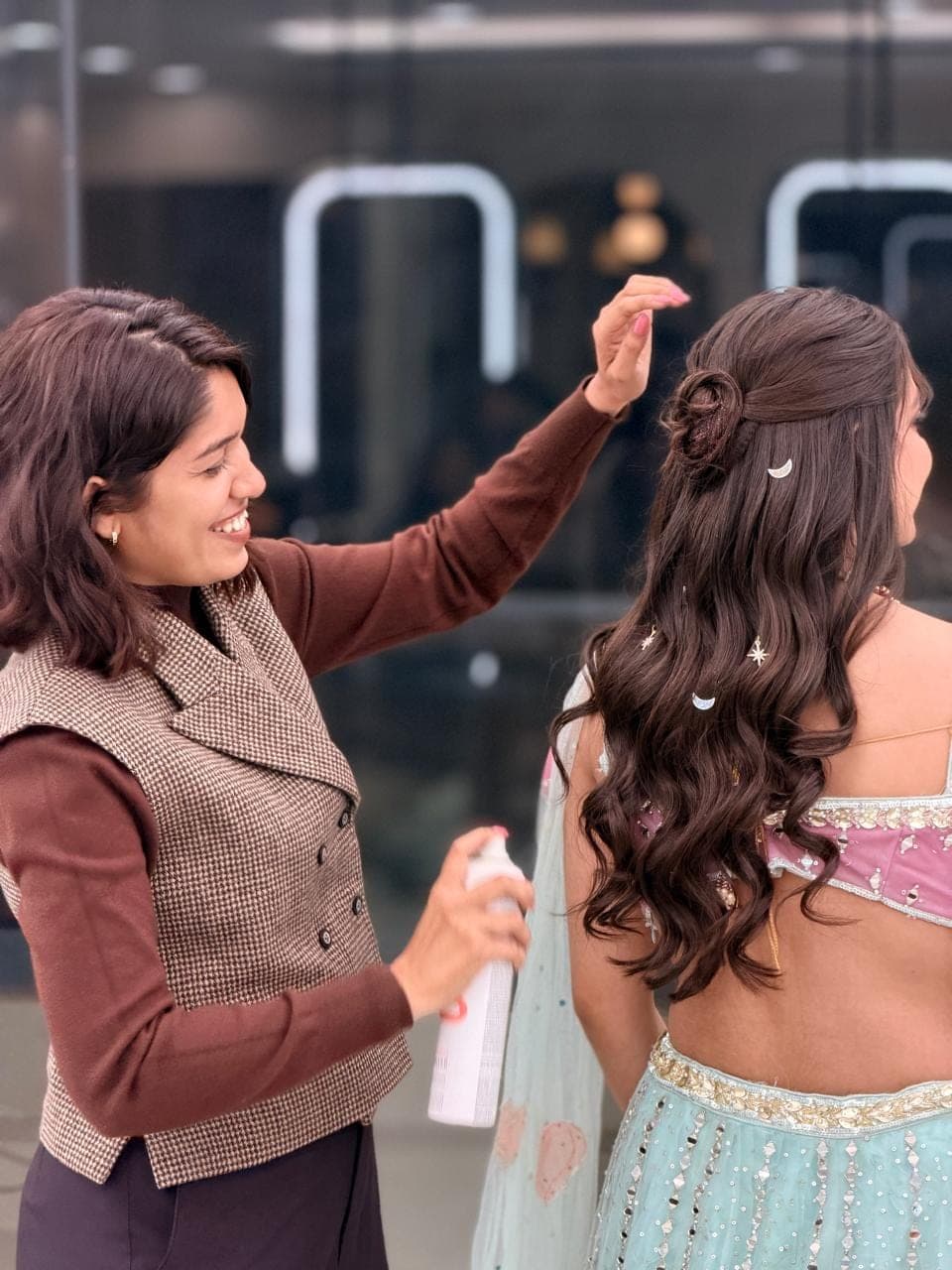
Your bridal hairstyle is just as important as your makeup and wedding outfit. A beautifully styled hairstyle enhances your facial features, complements your jewellery, and ensures you look stunning from every angle in your wedding photos.
If you're searching for the best bridal hair styling in Rajkot, Selestia Premium Ladies Salon offers personalized bridal hairstyling designed around your face shape, outfit, wedding theme, and hair type.
Whether you're wearing a traditional Gujarati bridal lehenga, designer saree, Indo-western outfit, or reception gown, our professional bridal hairstylists create elegant hairstyles that stay beautiful throughout your wedding celebrations.
Experts recommend choosing a hairstyle that complements your outfit, jewellery, dupatta, and face shape rather than simply following trends.
Why Bridal Hair Styling is Important
A professional bridal hairstyle helps you:
- Complete your bridal look
- Highlight your facial features
- Secure your dupatta comfortably
- Support heavy bridal jewellery
- Look beautiful in photographs
- Stay comfortable throughout the ceremony
- Maintain your hairstyle for long wedding events
Bridal Hair Styling Services at Selestia Premium Ladies Salon
We offer customized hairstyles for every wedding function.
Wedding Day Hairstyle
Elegant bridal buns with fresh flowers, accessories, and traditional styling.
Reception Hairstyle
Soft curls, Hollywood waves, glamorous ponytails, or elegant open hairstyles.
Engagement Hairstyle
Modern hairstyles with soft curls and elegant accessories.
Haldi Hairstyle
Simple braided hairstyles decorated with fresh flowers.
Mehendi Hairstyle
Boho braids, floral hairstyles, messy buns, and stylish ponytails.
Sangeet Hairstyle
High ponytails, glamorous curls, textured buns, and voluminous hairstyles.
See the full bridal offering and book your trial with Vidhi.
Bridal by VidhiTrending Bridal Hairstyles in 2026
Some of the most popular bridal hairstyles include:
Classic Bridal Bun
Perfect for brides wearing a dupatta.
Best with:
- Maang Tikka
- Gajra
- Fresh Flowers
- Traditional Jewellery
Soft Hollywood Waves
Ideal for receptions and cocktail parties.
Creates:
- Elegant volume
- Natural movement
- Luxurious finish
Floral Bun
A timeless hairstyle decorated with fresh roses, orchids, or jasmine flowers.
Low Textured Bun
A modern bridal hairstyle that looks elegant and sophisticated.
Half-Up Half-Down Hairstyle
Perfect for engagement and reception events.
Romantic Curls
Soft curls that create a glamorous bridal appearance.
Braided Bridal Hairstyle
Ideal for Mehendi and Haldi ceremonies.
Sleek Bridal Ponytail
Modern brides love sleek ponytails paired with statement jewellery.
Current bridal hairstyle trends include textured low buns, romantic waves, floral buns, elegant braids, and sleek ponytails with accessories.
How We Choose Your Bridal Hairstyle
At Selestia, every bridal hairstyle is customized based on:
Face Shape
- Round Face
- Oval Face
- Square Face
- Heart Face
Hair Length
- Short Hair
- Medium Hair
- Long Hair
Hair Thickness
- Thin Hair
- Thick Hair
- Curly Hair
- Straight Hair
Wedding Outfit
- Bridal Lehenga
- Saree
- Reception Gown
- Indo-Western Outfit
Jewellery
- Maang Tikka
- Passa
- Matha Patti
- Hair Accessories
- Veil
- Dupatta
Hair experts recommend coordinating the hairstyle with the outfit neckline, jewellery, and dupatta placement to achieve a balanced bridal look.
Bridal Hair Accessories
Enhance your hairstyle with:
- Fresh Roses
- Baby's Breath Flowers
- Gajra
- Hair Pins
- Pearl Accessories
- Crystal Hair Clips
- Hair Chains
- Bridal Hair Vine
- Decorative Combs
- Floral Accessories
Bridal Hair Preparation Timeline
3–6 Months Before Wedding
- Hair Consultation
- Hair Spa Treatments
- Hair Fall Care
- Healthy Diet
2 Months Before
- Keratin Treatment (if recommended)
- Nanoplastia
- Hair Botox
- Hair Coloring
1 Month Before
- Hair Trim
- Deep Hair Spa
- Hair Hydration
1 Week Before
- Final Hair Spa
- Hair Wash
- Hair Accessories Trial
Bridal hairstylists often recommend planning haircuts and hairstyle trials well before the wedding and maintaining healthy hair with regular trims.
Getting the makeup planned alongside it?
Bridal makeup guideWhy Brides Choose Selestia Premium Ladies Salon
- Professional Bridal Hair Stylists
- Personalized Hair Consultation
- Premium Hair Styling Products
- Luxury Salon Experience
- Fresh Flower Styling
- Long-Lasting Hairstyles
- Bridal Hair Accessories
- Hygienic Environment
- Complete Bridal Beauty Solutions
Book the Best Bridal Hair Styling in Rajkot
If you're looking for the best bridal hair styling in Rajkot, Selestia Premium Ladies Salon offers customized bridal hairstyles designed to enhance your natural beauty and complement every wedding event. From elegant buns and glamorous curls to modern ponytails and floral hairstyles, our expert bridal hairstylists ensure you look picture-perfect on your special day.