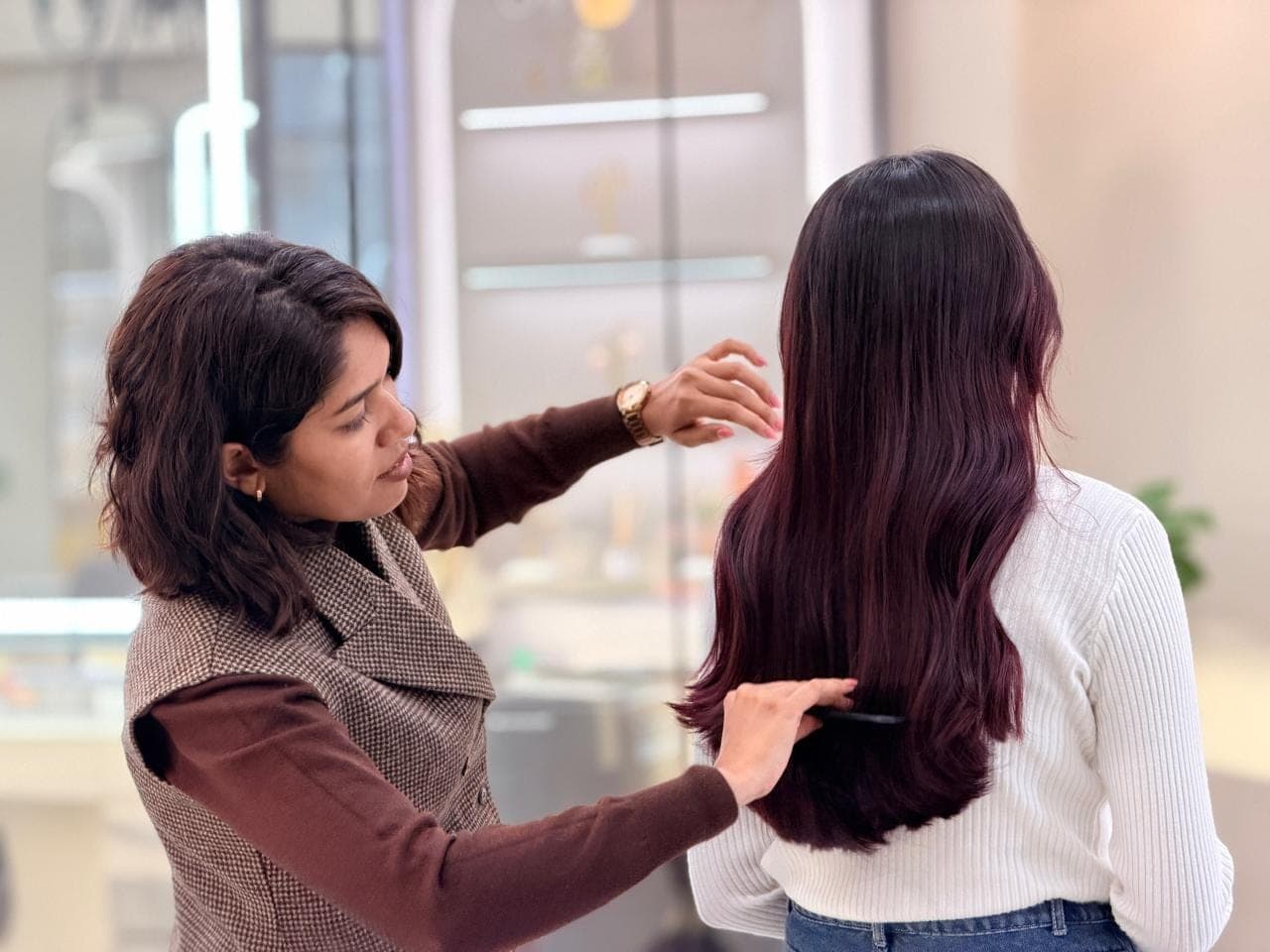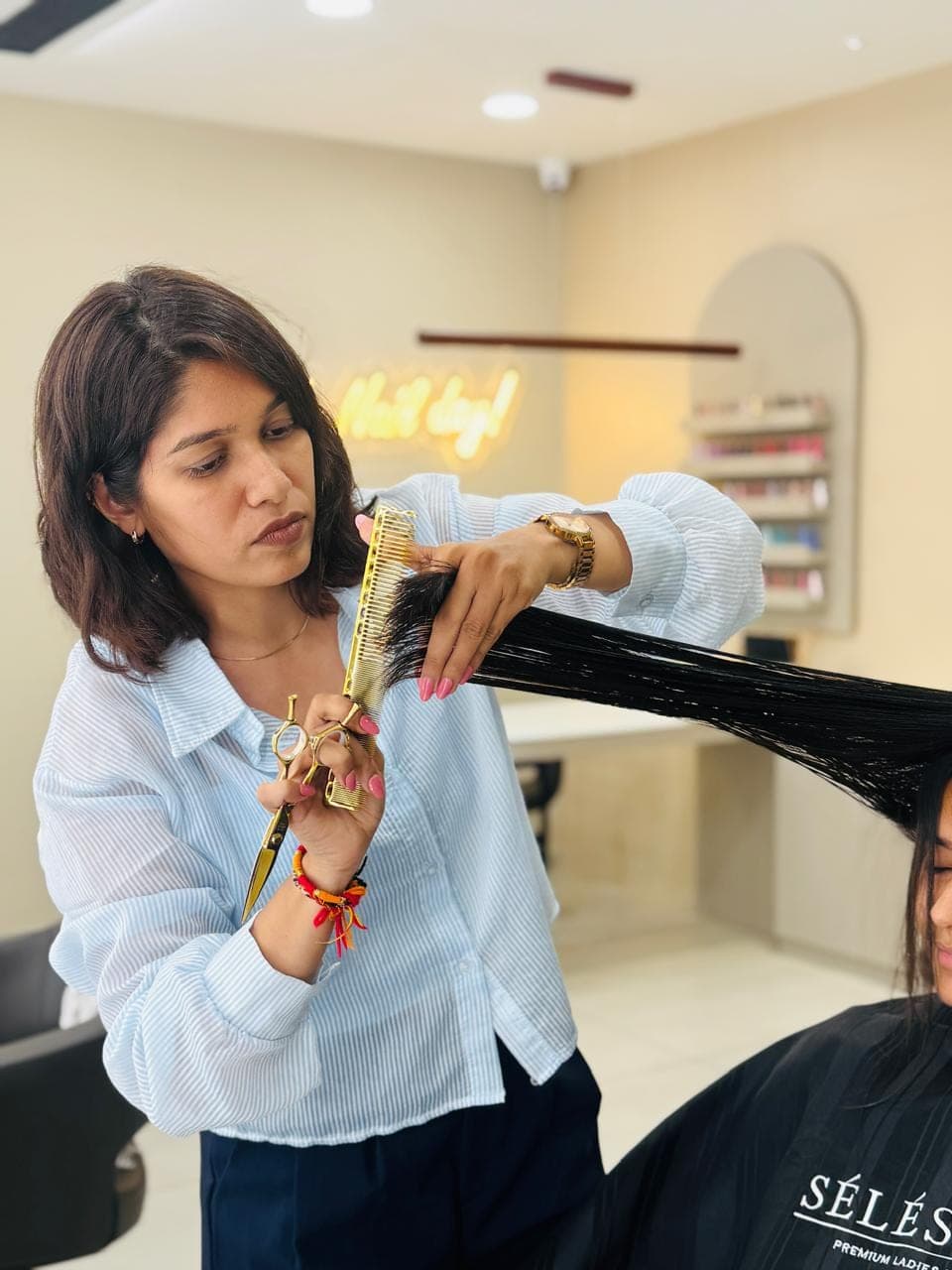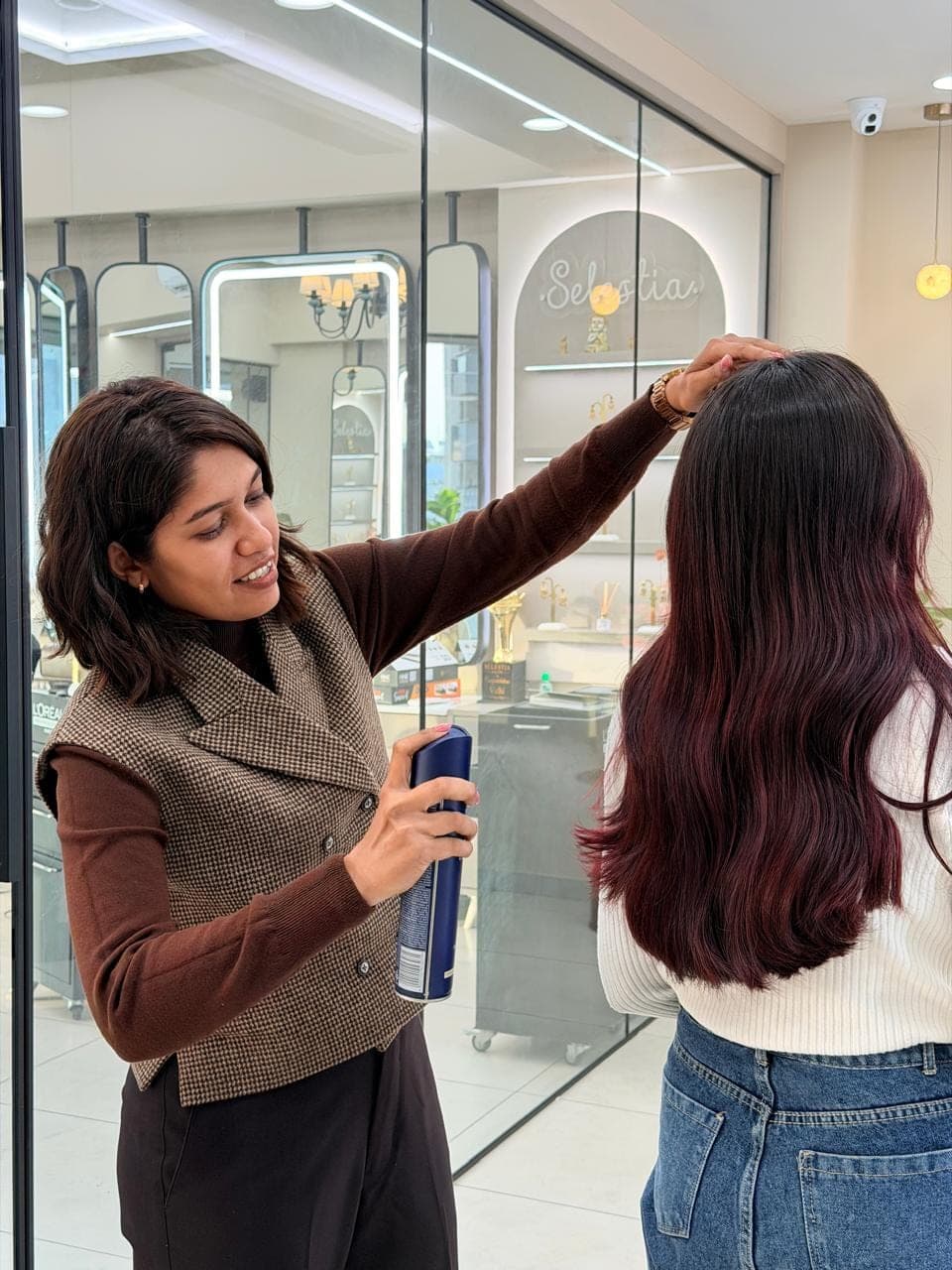
Both keratin and nanoplastia calm frizz and add shine, but they work differently. Keratin coats and smooths, giving a soft finish that suits fine or lightly wavy hair. Nanoplastia penetrates deeper for longer-lasting sleekness on coarse, unruly Rajkot hair. Your texture, water and lifestyle decide which one to book.
If you have spent a Rajkot summer fighting frizz, you already know the feeling. You wash, you blow-dry, you step outside into the heat and hard water, and within an hour your hair puffs back up. Smoothening treatments promise to change that, and the two names you will hear most at any good salon are keratin and nanoplastia. They sound similar, they are often confused, and they are frequently mis-sold as the same thing. They are not. At Sélestia, Vidhi walks every client through the real difference before a single strand is touched, because choosing wrong wastes both your money and your hair's health.
This guide breaks down how each treatment actually works, which one suits different hair types, how they hold up against our local heat and hard water, and the questions worth asking before you book. No jargon, no exaggerated promises, just honest guidance so you leave with hair that behaves, and lasts.
What is the real difference between keratin and nanoplastia?
Keratin treatment works largely on the surface. Keratin is a protein your hair is already made of, and a keratin ritual replenishes and seals it along the hair shaft, smoothing the cuticle so light bounces off evenly. The result is softer, shinier, more manageable hair with reduced frizz. It relaxes the wave and cuts drying time, but it is not designed to poker-straighten. Think of it as taming and polishing rather than transforming.
Nanoplastia goes deeper. Using ultra-fine, low-molecular-weight ingredients, it penetrates further into the cortex to restructure and align the hair from within. That deeper action is why nanoplastia holds smoother, sleeker results for longer, and copes better with genuinely coarse, thick or rebellious hair. Modern nanoplastia formulas are typically formaldehyde-free, which is a meaningful safety point we will return to. In short: keratin smooths the outside, nanoplastia reorganises the inside.
How do heat and hard water in Rajkot change the equation?
This is where the choice becomes genuinely local. Rajkot's climate is hard on hair in two specific ways. First, the heat and low humidity for much of the year dry the shaft out, then the monsoon flips to heavy humidity that swells the cuticle and drives frizz straight back. A smoothening treatment has to survive both extremes to be worth it.
Second, and this is the one most people underestimate, our hard water. High mineral content in Saurashtra water leaves deposits on the hair that dull shine, roughen texture and shorten the life of any smoothening service. Hard water quietly eats into your results. That is why, at Sélestia, we factor water into the recommendation itself. For hair that is regularly exposed to very hard water and high heat, nanoplastia's deeper hold usually outlasts a surface keratin coat. If your frizz is mild and your priority is soft, natural movement, keratin may still be the smarter, gentler choice. There is no universally best treatment, only the one that fits your hair and your tap.
Which one suits your hair type?
The honest answer comes from a strand assessment, not a blog. But here is a reliable starting framework we use in the atelier. Keratin tends to flatter finer, wavy-to-slightly-curly hair and anyone who wants a lighter, more natural finish with easier upkeep. Nanoplastia tends to suit thicker, coarser, very frizzy or previously chemically treated hair that needs stronger, longer-lasting control.
- Fine or lightly wavy hair, wanting softness and shine: keratin usually wins.
- Thick, coarse, very frizzy or unruly hair: nanoplastia usually holds better and longer.
- Coloured or highlighted hair: both can work, but formula and timing matter, so tell us your colour history first.
- Damaged or over-processed hair: a repair-led plan may come before any smoothening, because a treatment on fragile hair rarely lasts.
- You want a poker-straight look: neither is a straightener, and honest smoothening keeps healthy movement, not a flat sheet.
This is precisely why we never sell a smoothening treatment over the phone. Two clients with the same hair length can need different services because their texture, porosity and past chemical work differ.
Keratin vs nanoplastia at a glance
Use this comparison as a quick orientation, then let a consultation confirm what actually suits you. Longevity figures are typical ranges and depend heavily on your home care and water.
| Factor | Keratin treatment | Nanoplastia |
|---|---|---|
| How it works | Coats and seals the cuticle on the surface | Penetrates the cortex to restructure from within |
| Finish | Soft, shiny, natural movement retained | Sleeker, smoother, more controlled |
| Best for | Fine to lightly wavy, mild frizz | Coarse, thick, very frizzy or unruly hair |
| Typical longevity | Around 3 to 4 months | Around 5 to 8 months |
| Formaldehyde | Varies by formula, we use safer options | Typically formaldehyde-free |
| Aftercare demand | Moderate, sulphate-free care needed | Moderate, sulphate-free care needed |
| Suits Rajkot hard water | Good for mild cases | Stronger, longer hold in harsh conditions |
Are these treatments safe, and what about formaldehyde?
Safety is a fair concern, and you deserve a straight answer. The reputation problem with older smoothening services came from formaldehyde-releasing formulas that could irritate eyes and airways during application. The professional landscape has moved on. Modern nanoplastia is generally formulated to be formaldehyde-free, and there are gentler keratin systems too. At Sélestia we work only with professional-grade products and prioritise safer formulations, applied in a well-ventilated private space.
Every chemical service at Sélestia begins the same way: a consent-led consultation where we review your hair history, allergies, colour work and expectations, then agree the plan together. Where relevant we strand-test first. You leave with a printed after-care card and a follow-up date. We do not make medical claims and we will tell you honestly if your hair needs strengthening before any smoothening, because a treatment on compromised hair is neither safe practice nor good value.
See the full range of smoothening, keratin and nanoplastia rituals, and book a consultation with Vidhi to find the right fit for your hair.
Explore hair treatmentsHow do you make the results last in our climate?
A great smoothening treatment is only half the job. What you do at home decides whether it lasts three months or falls flat in six weeks, especially against Rajkot's hard water and heat. The core rules are simple and the same for both treatments, with the payoff being far longer wear.
- 1.Wait the recommended settling window before your first wash so the treatment can set fully.
- 2.Switch to a sulphate-free, salt-free shampoo and conditioner, this is non-negotiable for longevity.
- 3.Reduce wash frequency where you can, and rinse with the coolest water that is comfortable.
- 4.If your home water is very hard, ask us about a clarifying and chelating routine, or a filter, to slow mineral build-up.
- 5.Use a heat protectant before styling, and go easy on very high heat tools.
- 6.Book your recommended follow-up so we can assess and top up before frizz fully returns.
For anyone timing a treatment around a wedding, Navratri, or the festive Diwali stretch, plan ahead. Smoothening looks its best a week or two after application, not the same day, so we schedule around your muhurat and functions rather than the other way round. Travelling across Saurashtra for the wedding season? We will build that into your after-care too, so your hair holds through long days and long drives.
So which should you choose?
If you take one thing from this, let it be that keratin and nanoplastia are not rivals so much as different tools for different hair. For milder frizz and a soft, natural finish on finer hair, a keratin treatment in Rajkot is often ideal. For thicker, coarser, stubbornly frizzy hair that has to survive our heat and hard water, nanoplastia usually earns its longer hold. A proper frizzy hair treatment starts with looking at your actual strands, your colour history and your water, then choosing accordingly.
That is exactly what a consultation at Sélestia is for. Vidhi will assess your hair in person, explain what she is seeing, and recommend the treatment that genuinely suits you, or tell you if repair should come first. No pressure, no invented promises, just expert, consent-led care. Prices are shared on enquiry once we know what your hair actually needs. When you are ready, reach out on WhatsApp or call, and let us help your hair behave, beautifully, whatever Rajkot's weather is doing.