In short

A hair spa is a professional scalp-and-length treatment that cleanses, deep conditions and rebalances hair in a controlled sequence. It matters more in Rajkot than in most Indian cities because our hard water, dust and long dry summers strip moisture faster than usual. At Selestia every spa starts with a scalp reading, so the ritual is matched to your hair rather than picked off a fixed menu. Most guests get the best results from a session every three to four weeks.

What a hair spa actually is

A hair spa is not a fancy name for conditioner. It is a structured salon treatment that works on two things at once: the scalp, which is skin and behaves like skin, and the hair shaft, which is dead protein that can only be protected and repaired, never regrown. A good spa clears product and mineral build-up, stimulates circulation at the follicle, delivers moisture and lipids deep into the cuticle, and then seals that cuticle so the benefit lasts more than a single wash.

The reason it feels different from home conditioning is heat, time and technique. Salon masks are formulated at higher active concentrations, they are held under controlled steam or infrared so the cuticle lifts and accepts them, and they are massaged in with a sequence that moves lymph and blood rather than just spreading product around. That combination is what turns a twenty-minute wash into a treatment your hair still remembers three weeks later.

Why Rajkot hair needs a spa more than most

Rajkot gives hair a genuinely hard time. Our municipal and borewell water carries a high mineral load, and calcium and magnesium bind to the hair shaft as a fine, invisible film. That film makes hair feel rough and look dull, blocks conditioner from penetrating, and makes colour fade faster and lift unevenly. Guests often tell us their hair felt completely different when they were studying in another city, and hard water is usually the reason.

Then there is the climate. Summers run long and dry with harsh sun that oxidises the cuticle and lightens colour. The monsoon swings the other way and brings humidity that swells the shaft and lifts frizz. Dust from the roads settles on the scalp and mixes with sebum, which is why so many women here deal with a flaky, itchy scalp in the middle of an otherwise oily week. A hair spa is the one appointment that addresses all four of those pressures in a single sitting.

What happens during a hair spa at Selestia

We keep the sequence consistent so results are predictable, but the products change depending on what your scalp and lengths need on the day.

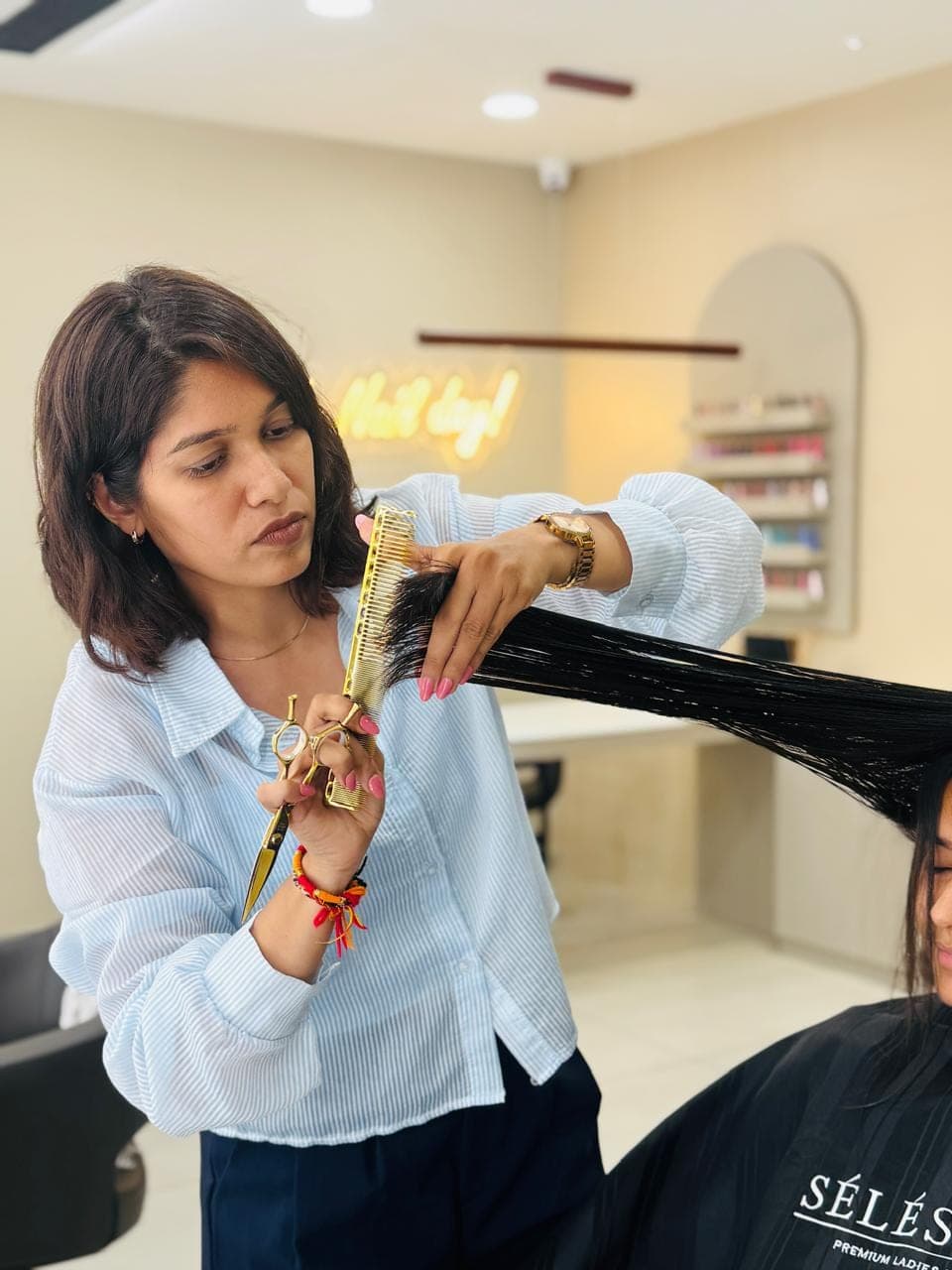
  1. 1.Scalp and hair reading. We look at your scalp under good light, feel the porosity of your lengths, and ask about your wash routine, water source, colour history and any medication or hair fall you have noticed. This is a conversation, not a form.
  2. 2.Pre-cleanse and de-mineralising wash. A clarifying or chelating shampoo lifts hard-water minerals, silicone build-up, oil and pollution. Skipping this step is the single most common reason a spa underperforms.
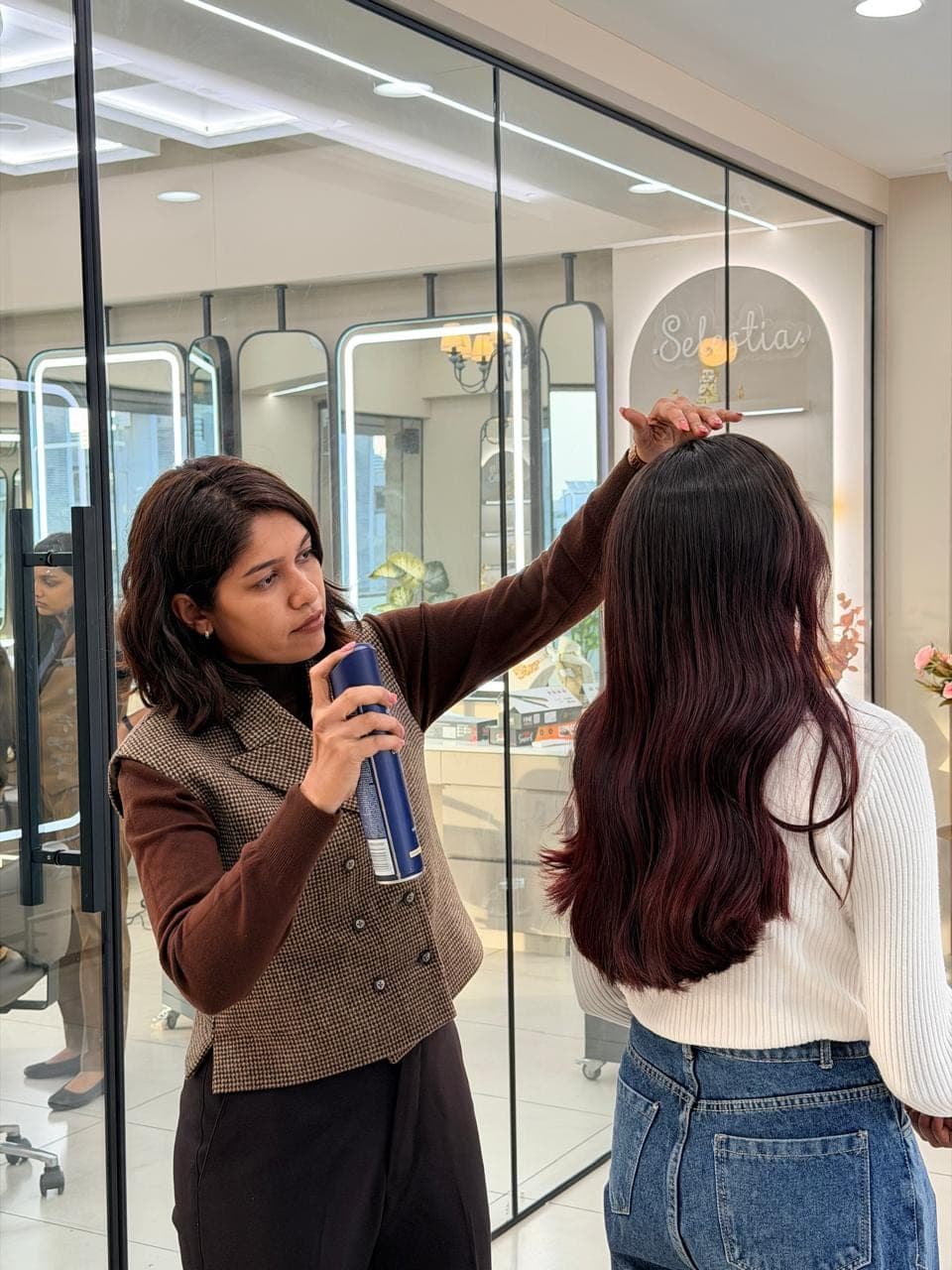
  3. 3.Scalp therapy and massage. A targeted serum or ampoule is applied section by section, then worked in with a fifteen to twenty minute massage across the scalp, nape and shoulders. This is where circulation improves and tension releases.
  4. 4.Mask application on the mid-lengths and ends. The mask is chosen for your porosity: light and hydrating for fine hair, richer and lipid-heavy for coarse or coloured hair, protein-supported for chemically treated hair.
  5. 5.Controlled heat. Steam or an infrared hood for ten to fifteen minutes lifts the cuticle so the mask can actually get inside rather than sit on top.
  6. 6.Cool rinse and cuticle seal. A cool rinse plus an acidic sealing conditioner closes the cuticle, which is what locks in shine and keeps frizz down.
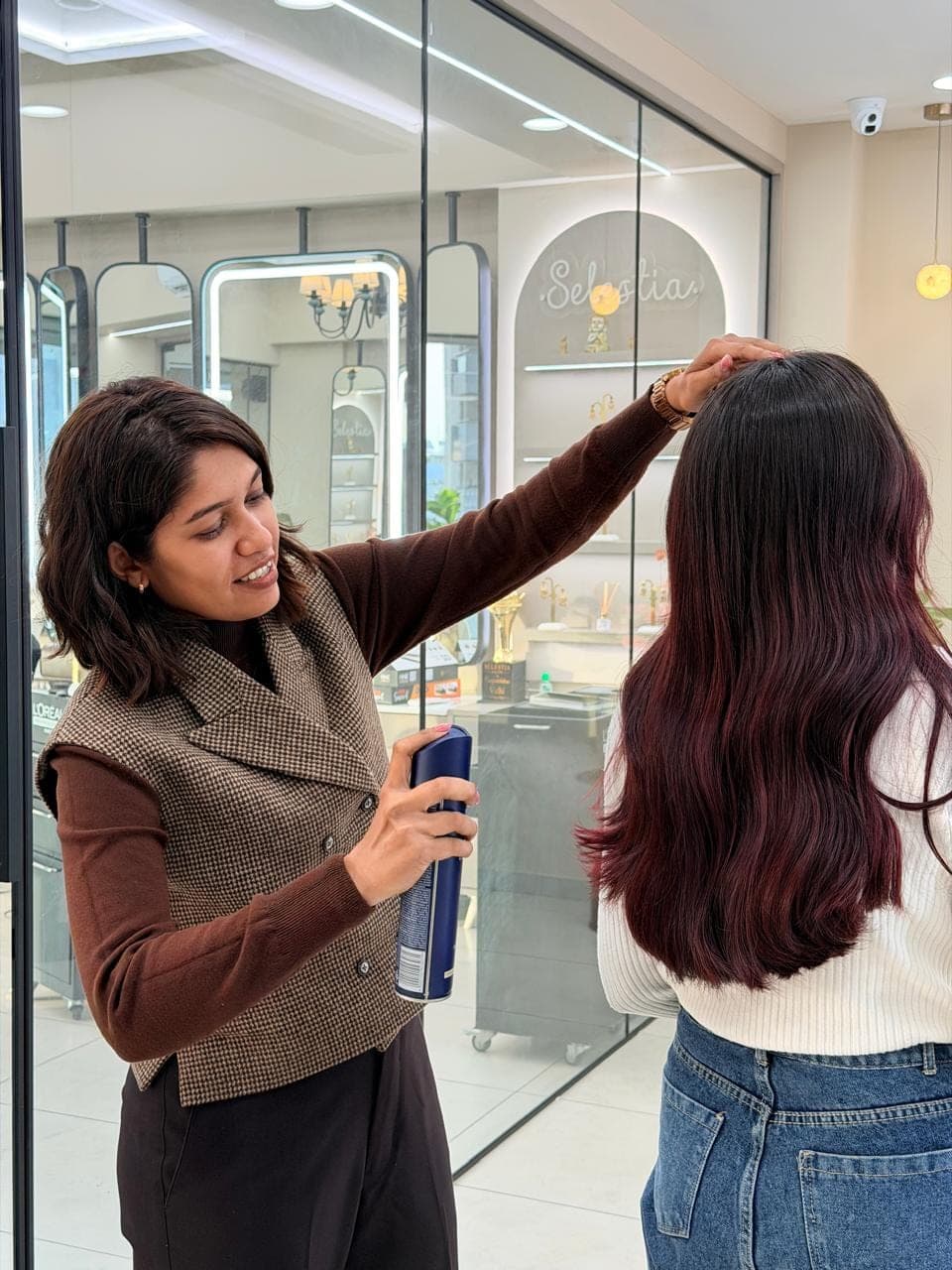
  7. 7.Blow-dry and finish. We dry with a nozzle and controlled tension so you leave seeing the result, and we tell you honestly what your hair needs next.

The whole ritual runs between forty-five and ninety minutes depending on hair length and which spa you have chosen. It is done in a private, ladies-only setting at our Shastri Nagar atelier, and nothing chemical happens without your consent.

The different kinds of hair spa, and who each one suits

The phrase hair spa covers several very different treatments, and booking the wrong one is why some people conclude that spas do not work for them. Use this table as a starting point, then let a stylist confirm it against your scalp.

Spa typeBest forWhat it actually doesSuggested frequency
Hydrating spaDry, dull, sun-exposed hairRestores water and lipids to a thirsty cuticle, softens and adds shineEvery 3 to 4 weeks
Anti-hair-fall spaNoticeable shedding, thinning ponytailStimulates circulation, supports the follicle and reduces breakage at the rootEvery 2 to 3 weeks for a course, then monthly
Scalp detox and anti-dandruff spaFlaking, itch, build-up, oily rootsClears sebum and mineral build-up, rebalances the scalp microbiome, calms irritationEvery 2 to 4 weeks until settled
Protein and repair spaChemically treated, bleached or heat-damaged hairRebuilds weakened bonds and fills gaps in the cortex to reduce snap and split endsEvery 4 to 6 weeks, alternated with hydration
Colour-safe spaRecently coloured or highlighted hairSeals the cuticle, keeps tone true and slows fade without stripping pigmentEvery 3 to 4 weeks between colour appointments
Anti-frizz and smoothing spaHumidity frizz, coarse or wavy texturesWeighs down the cuticle and reduces the swelling that causes monsoon frizzEvery 3 weeks through the rains

What a hair spa can genuinely do for you

We would rather set honest expectations than oversell, because a guest who knows what to expect is a guest who comes back. Here is what a well-chosen spa reliably delivers.

  • Noticeably softer, smoother hair from the first session, usually lasting two to three washes and improving cumulatively over a course.
  • Less breakage, because hydrated hair stretches instead of snapping when you comb or tie it.
  • A calmer, cleaner scalp, with less itch and flaking once build-up is cleared.
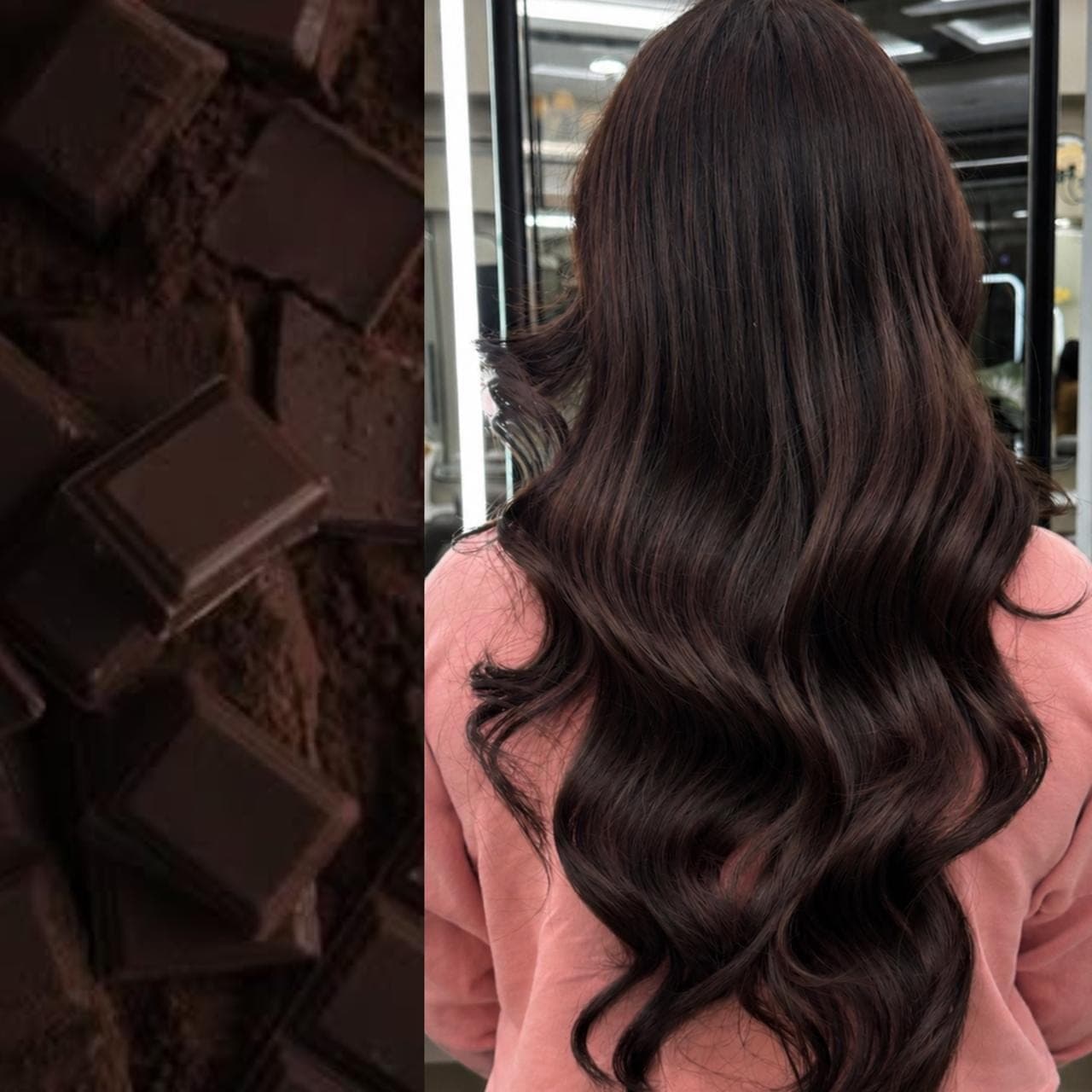
  • Better shine, because a sealed cuticle reflects light evenly instead of scattering it.
  • Colour that holds its tone longer and fades more gracefully.
  • Easier styling, shorter blow-dry time and less reliance on heat and serum at home.
  • Genuine stress relief, which is not a cosmetic benefit but does matter for stress-related shedding.

What a hair spa cannot do

A spa will not regrow hair on a bald patch, reverse genetic pattern thinning, or repair a split end permanently. Once a hair splits, the only real fix is a trim. A spa also cannot straighten curly or wavy hair. It reduces frizz and adds weight, so hair sits smoother, but the pattern of your hair is set in the follicle and does not change with a mask.

If your hair fall is sudden, heavy or accompanied by visible scalp, the honest advice is medical before cosmetic. Thyroid imbalance, iron and vitamin D deficiency, PCOS, post-partum shifts, crash dieting and certain medications all show up in hair, and no salon treatment will out-run an unaddressed cause. We will say this to your face rather than sell you a package, and we will still look after the hair you have while you sort out the rest.

Not sure which spa your scalp actually needs? Come in for a reading first, and we will build the ritual around it.

Hair services

How often should you book a hair spa?

For most women in Rajkot, once every three to four weeks is the sweet spot. That interval matches the rhythm at which hard water build-up returns and moisture drains out of the cuticle. If your hair is chemically treated, coloured or heat-styled often, stay closer to three weeks. If your hair is virgin, thick and generally healthy, once every five or six weeks is usually enough.

During an active problem such as a flaking scalp or a shedding phase, we sometimes recommend a short course of closer sessions, for example every two weeks for six to eight weeks, and then a return to maintenance. What we do not recommend is buying a large package before you have seen how your hair responds to the first two sessions.

Hair spa, deep conditioning and keratin are not the same thing

This confuses a lot of people, so it is worth being precise. Deep conditioning is one component: a mask and some heat. A hair spa includes deep conditioning but adds the clarifying step, the scalp work and the massage, which is why it does more for the root as well as the length. Neither of them is a chemical service.

Keratin, smoothening, nanoplastia and hair botox are different animals altogether. They change how the hair shaft behaves, they last for months, and they involve chemistry, heat sealing and a proper consent conversation. A spa is maintenance and nourishment. A smoothening treatment is a transformation. Many guests do both, spacing spa sessions between chemical services to keep the hair conditioned.

Aftercare that protects your results

  • Wait twenty-four to forty-eight hours before your next wash so the mask settles.
  • Switch to a sulphate-free, pH-balanced shampoo. Harsh detergent undoes a spa faster than anything else.
  • Condition mid-lengths to ends every single wash, never the scalp.
  • Rinse with the coolest water you can tolerate. Hot water lifts the cuticle straight back open.
  • Consider a simple shower filter or a final rinse from stored, softer water if your borewell supply is very hard.
  • Use heat protection before any dryer, straightener or curling tool, and keep the temperature moderate.
  • Sleep on a satin or silk pillow cover and tie hair loosely, never in a tight wet bun.
  • Trim every eight to ten weeks so the ends stay clean and the spa is not fighting split hair.

How to choose the best hair spa in Rajkot

Price alone tells you very little. What separates a genuinely good hair spa from an expensive wash is the diagnosis, the products and the time given. Before you book anywhere, look for these signals.

  • Does the stylist examine your scalp and ask about your water, colour history and medication before recommending anything?
  • Is there a clarifying or chelating step, or do they go straight to the mask?
  • Are the products professional lines such as L'Oreal, Wella or Schwarzkopf, and are they opened in front of you?
  • Is the massage a proper fifteen to twenty minutes, or a token two-minute rub?
  • Is heat applied under control, with steam or an infrared hood, rather than a hot towel and hope?
  • Do they tell you honestly what a spa will not fix, or does everything get the same answer?
  • Is the space clean, private and comfortable, with fresh towels and capes per guest?

At Selestia we work in a private, ladies-only atelier at Shastri Nagar with a small team, which means fewer guests at a time and unhurried appointments. Consultations run in English, Hindi and Gujarati, and every chemical service begins with a consent conversation. That is the standard we would want for our own hair.

The takeaway

A hair spa is the most reliable, lowest-risk thing you can do for hair in Rajkot, precisely because it targets the two problems this city creates: mineral build-up and moisture loss. Book the right type for your scalp, keep it to a sensible rhythm of three to four weeks, protect it with honest home care, and the difference compounds. If you are unsure where to start, come in for a reading and we will tell you what your hair actually needs, even if the answer is less than you expected.