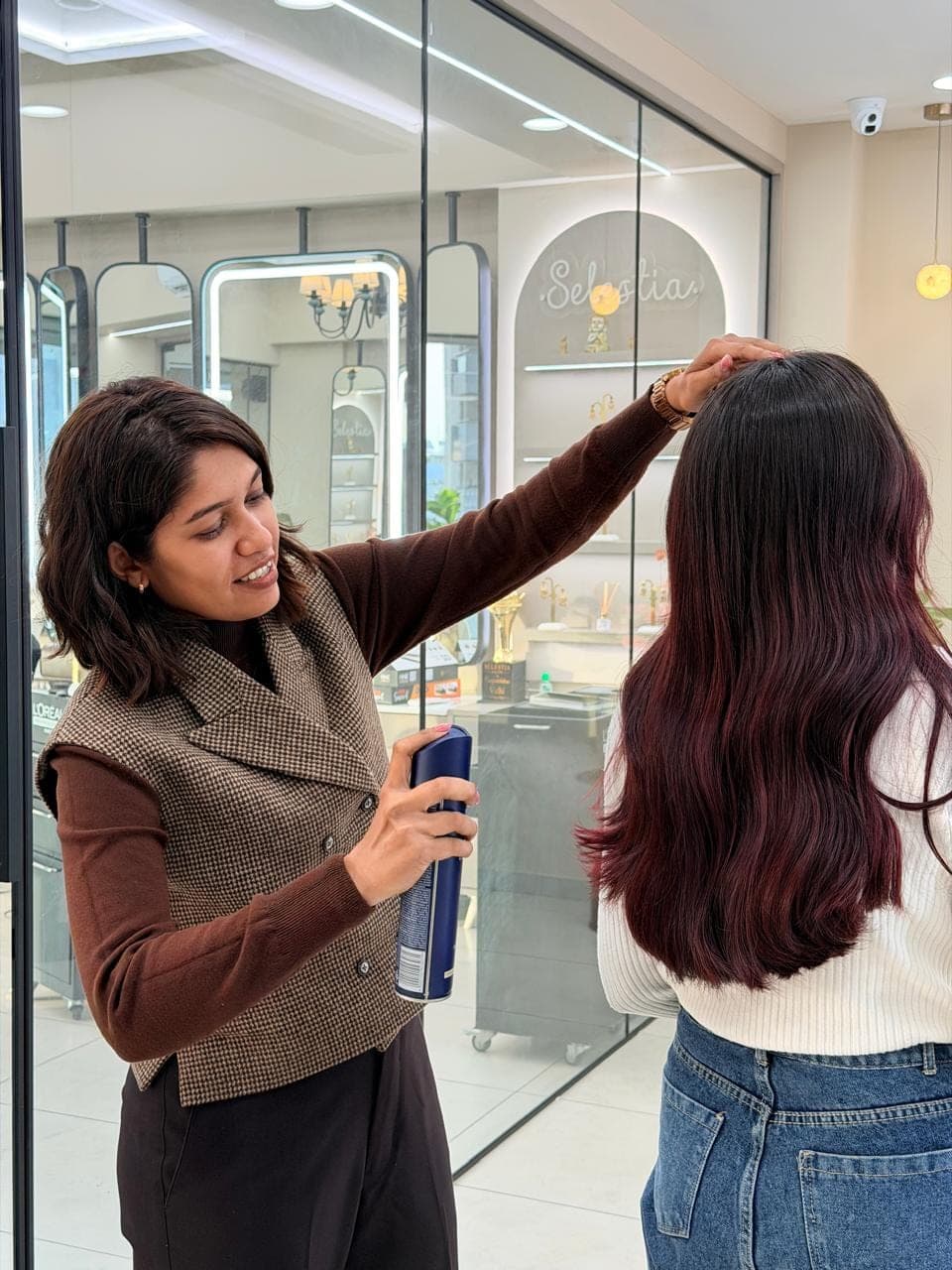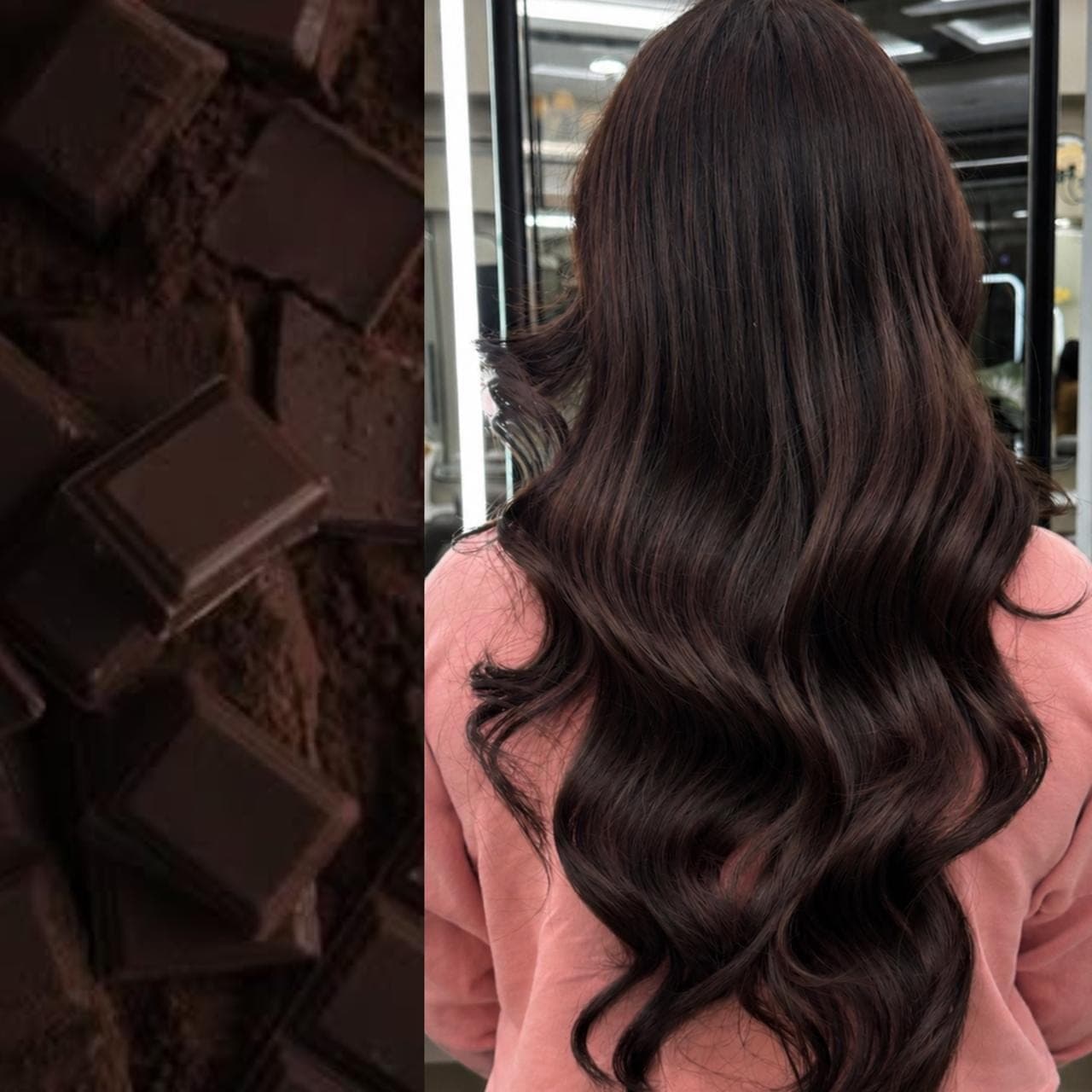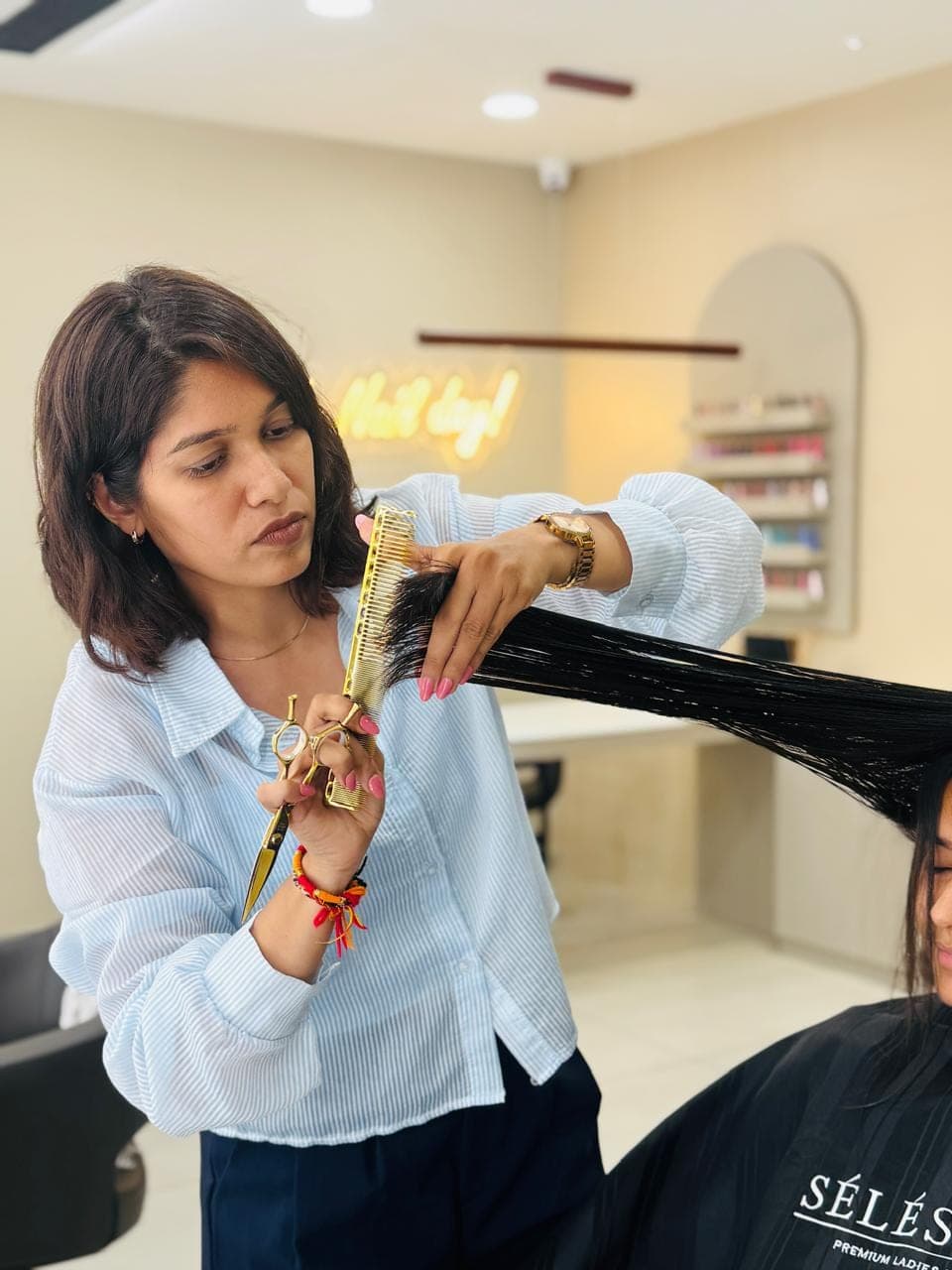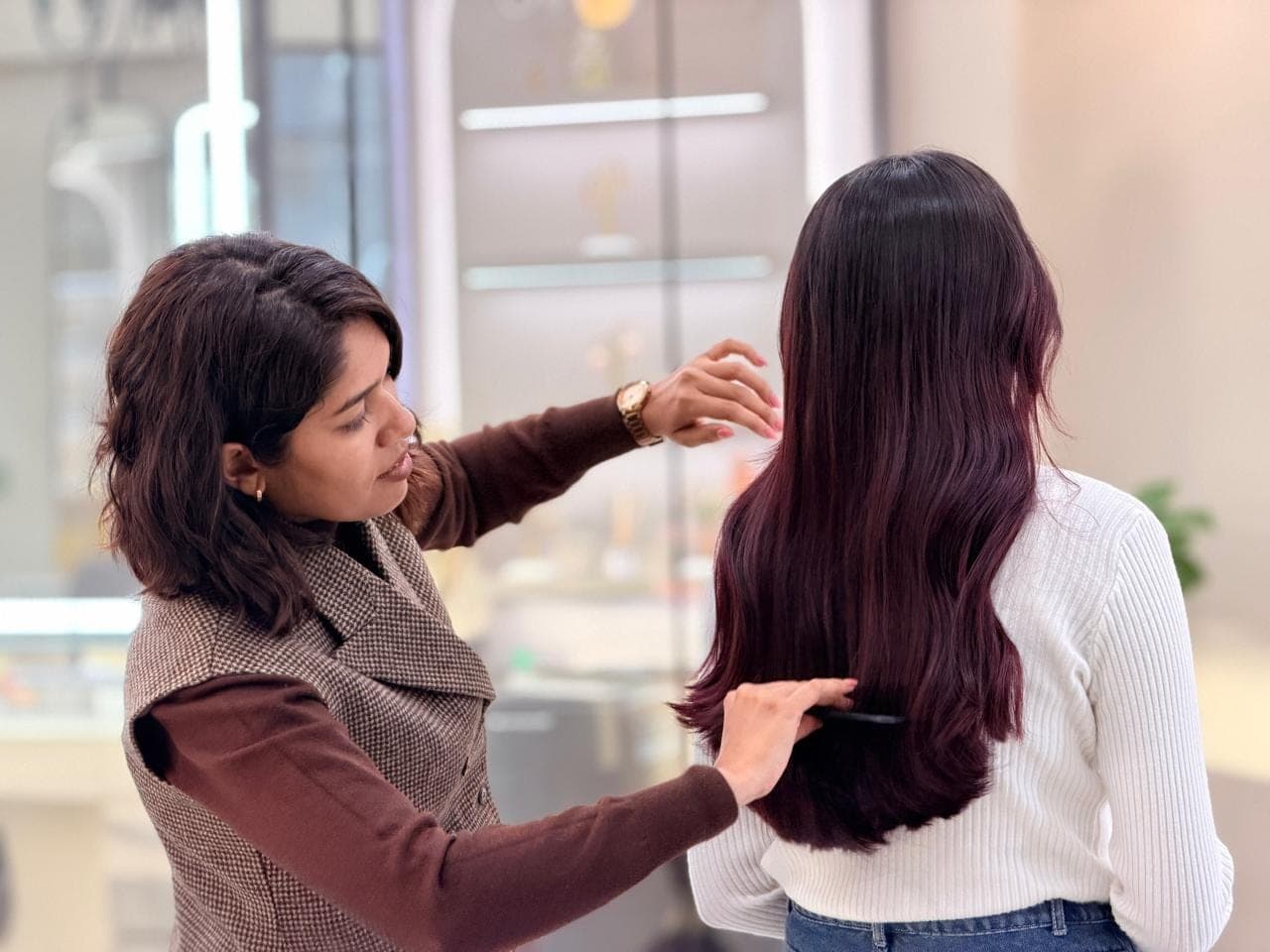
Dreaming of silky, smooth, and frizz-free hair every day? If you're looking for the best hair smoothening in Rajkot, you've come to the right place.
Humidity, pollution, hard water, heat styling, and chemical treatments can leave your hair dry, rough, and difficult to manage. Professional hair smoothening is a semi-permanent salon treatment that helps reduce frizz, improve shine, and make your hair easier to style while maintaining a natural-looking finish.
At Selestia Premium Ladies Salon, our experienced hair professionals provide customized hair smoothening treatments using premium products and advanced techniques to give you healthy-looking, soft, and manageable hair.
What is Hair Smoothening?
Hair smoothening is a professional salon treatment that relaxes the hair structure to reduce frizz and soften waves, resulting in smoother, shinier, and more manageable hair. Unlike permanent hair straightening, smoothening is designed to preserve your hair's natural movement while improving texture and reducing styling time.
Benefits of Hair Smoothening
Professional hair smoothening offers many advantages:
- Reduces frizz and flyaways
- Makes hair silky and smooth
- Adds natural shine
- Makes daily styling easier
- Reduces blow-drying time
- Controls humidity-related frizz
- Improves hair texture
- Gives a polished, healthy appearance
- Makes hair easier to comb
- Helps maintain a salon-finished look for months
With proper aftercare, results generally last 3 to 6 months.
Who Should Get Hair Smoothening?
Hair smoothening is ideal for women with:
- Frizzy hair
- Dry hair
- Wavy hair
- Thick hair
- Unmanageable hair
- Dull hair
- Slightly curly hair
- Hair affected by humidity
- Hair that takes too long to style
Signs You Need Hair Smoothening
Hair smoothening may be a good option if:
- Your hair becomes frizzy after every wash.
- You spend a long time styling your hair.
- Humidity makes your hair puff up.
- Your hair lacks shine and softness.
- Your hair is difficult to comb and manage.
- You want a smoother look without permanently straightening your hair.
Hair Smoothening Process at Selestia Premium Ladies Salon
Step 1 – Hair Consultation
Our experts examine your hair type, scalp condition, and previous treatments.
Step 2 – Deep Cleansing
A clarifying shampoo removes dirt, oil, and product buildup.
Step 3 – Smoothening Cream Application
A professional smoothening solution is applied evenly to the hair.
Step 4 – Processing Time
The treatment works on the hair structure to reduce frizz.
Step 5 – Blow Dry
Hair is carefully blow-dried before sealing.
Step 6 – Heat Sealing
A professional flat iron locks the treatment into the hair.
Step 7 – Neutralizing & Final Styling
The treatment is stabilized and your hair is styled to reveal a smooth, glossy finish.
Book a smoothening consultation with our hair experts in Rajkot.
Hair servicesHair Smoothening vs Keratin Treatment
| Hair Smoothening | Keratin Treatment |
|---|---|
| Smooths and softens hair | Reduces frizz and adds protein |
| Creates a sleek finish | Gives a more natural finish |
| Suitable for wavy or frizzy hair | Ideal for damaged and frizzy hair |
| Lasts around 3–6 months | Lasts around 3–6 months |
The right treatment depends on your hair type, condition, and desired result. A professional consultation is the best way to decide.
Want the detail on keratin first?
Keratin treatment guideHair Smoothening vs Nanoplastia
| Hair Smoothening | Nanoplastia |
|---|---|
| Smooth and manageable finish | Deep nourishment with smoothing |
| Semi-permanent | Long-lasting smoothing |
| Suitable for many hair types | Popular for dry and damaged hair |
| Professional chemical treatment | Modern amino acid-based treatment (product dependent) |
Read how Nanoplastia compares in full.
Nanoplastia guideHair Smoothening Aftercare
To enjoy long-lasting results:
- Use sulfate-free shampoo and conditioner.
- Wash your hair only 2–3 times a week.
- Use a deep-conditioning hair mask weekly.
- Apply a leave-in serum to reduce frizz.
- Always use a heat protectant before styling.
- Avoid tight hairstyles immediately after treatment.
- Follow your stylist's aftercare instructions.
Hair Smoothening Cost in Rajkot
The price of hair smoothening depends on:
- Hair length
- Hair thickness
- Hair density
- Hair condition
- Products used
- Time required
At Selestia Premium Ladies Salon, we provide a personalized consultation to recommend the most suitable treatment for your hair.
Why Choose Selestia Premium Ladies Salon?
- Professional Hair Stylists
- Premium International Hair Products
- Personalized Hair Consultation
- Hygienic Luxury Salon
- Modern Hair Treatment Technology
- Customized Hair Care Solutions
- Comfortable Premium Ambience
- Excellent Customer Satisfaction
Why Women in Rajkot Choose Hair Smoothening
Rajkot's climate often exposes hair to:
- Heat
- Dust
- Pollution
- Hard water
- Humidity
These factors can make hair rough, dry, and frizzy. Professional hair smoothening helps improve manageability, reduces styling time, and gives your hair a smoother, healthier appearance.
Book the Best Hair Smoothening in Rajkot
If you're searching for the best hair smoothening in Rajkot, Selestia Premium Ladies Salon offers personalized consultations, premium hair treatments, and expert aftercare to help you achieve smooth, shiny, and manageable hair that complements your lifestyle.